IV Therapy vs. Drinking Water: Which Hydrates You Faster?
You just woke up after a rough night. Or maybe you pushed hard at the gym and feel completely drained. You reach for a glass of water — but hours later, you still feel off.
Sound familiar?
Most of us have been told that drinking water is the answer to dehydration. And while that's true in many cases, it's not always the fastest answer. That's where IV hydration therapy comes in.
In this article, we'll break down the real difference between IV hydration vs. oral hydration — how each works, which one rehydrates you faster, and when it makes sense to go beyond the water bottle.
Why Hydration Matters More Than You Think
Water makes up about 60% of the human body. It regulates your temperature, supports organ function, cushions your joints, and keeps your brain sharp.
When you're dehydrated, even mildly, you can experience:
- Fatigue and brain fog
- Headaches and dizziness
- Muscle cramps and weakness
- Nausea and digestive issues
- Difficulty concentrating
The tricky part? By the time you feel thirsty, you're already dehydrated. And for some people — especially those dealing with illness, a hangover, or intense physical activity — oral rehydration simply can't keep pace with your body's demand.
How Oral Hydration Works (And Its Limits)
The Long Road from Mouth to Cell
When you drink water, it doesn't go directly into your bloodstream. It travels through your digestive system — from your stomach to your small intestine — before being absorbed into circulation.
This process takes time. Under normal conditions, it can take 45 minutes to two hours for water to fully absorb and reach your cells.
Why Electrolytes Help — But Still Have Limits
Sports drinks and electrolyte packets can slightly improve hydration absorption rate. Electrolytes like sodium and potassium help pull water into your cells more efficiently. But they still have to travel the same digestive pathway.
If your stomach is upset, you're vomiting, or your digestion is sluggish, oral hydration becomes even less effective. Your body can't absorb what it can't process.
For everyday hydration, drinking water is ideal. But for rapid rehydration when it matters most? Oral fluids have real limitations.
What Is IV Hydration Therapy?
Straight to the Source
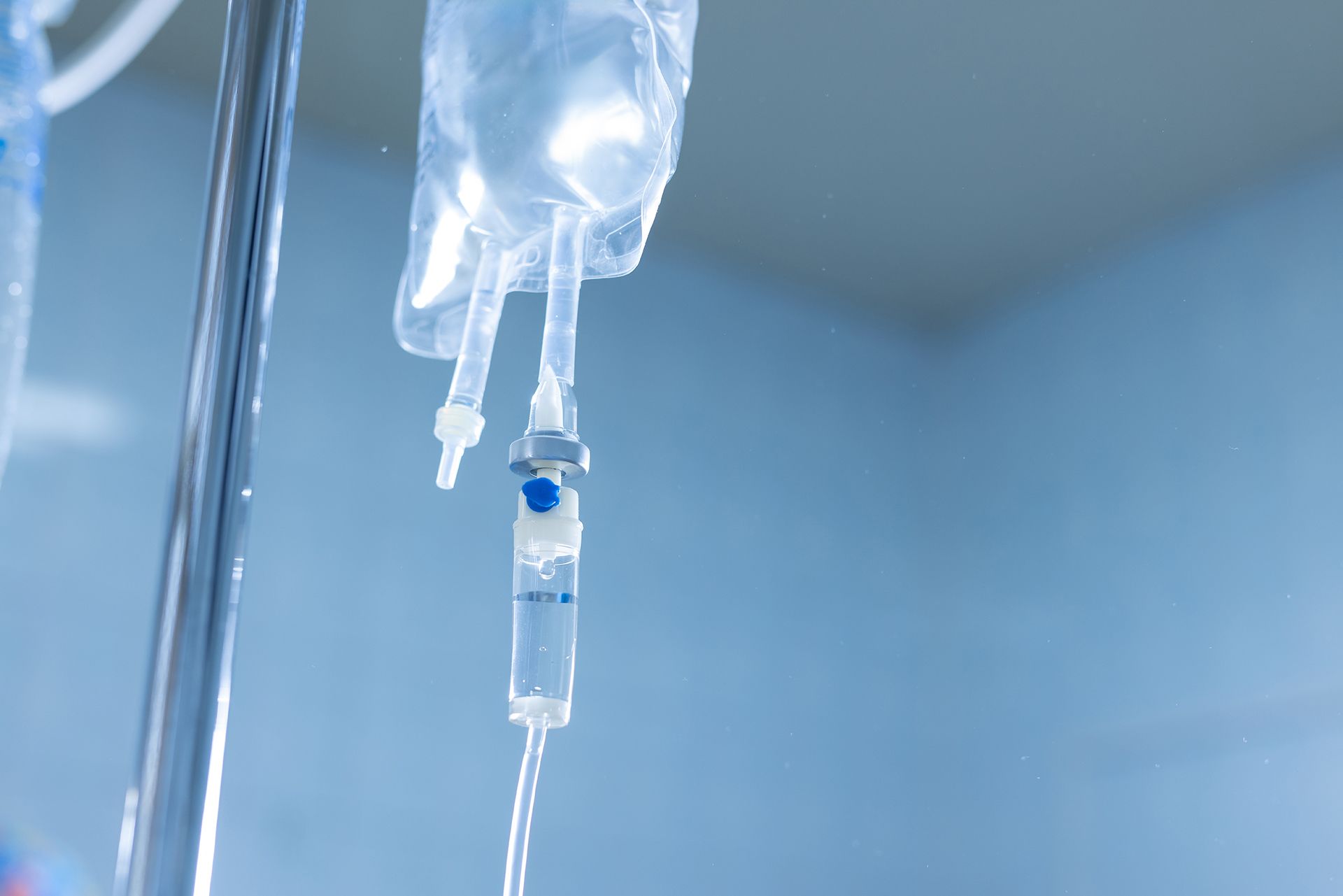
Intravenous hydration therapy delivers fluids, electrolytes, and nutrients directly into your bloodstream through a small IV line. There's no digestive process involved — your body receives and uses everything immediately.
A standard IV vitamin drip typically contains:
Saline solution — sterile saltwater that rapidly restores fluid volume
Electrolytes — sodium, potassium, magnesium, and calcium to restore cellular balance
Vitamins — such as B-complex, Vitamin C, or Vitamin B12 depending on the formula
Optional add-ins — like anti-nausea medication, glutathione, or NAD+ for targeted support
How Fast Does IV Therapy Work?
Most people begin feeling the effects of IV therapy for dehydration within 30 to 45 minutes. Because fluids go directly into circulation, your cells start receiving hydration almost immediately — with no waiting for digestion.
For someone recovering from a hangover, illness, or an intense workout, that speed difference is everything.
IV Hydration vs. Oral Hydration: Head-to-Head
| Drinking Water | IV Hydration Therapy | |
|---|---|---|
| Absorption Time | 45 min – 2 hours | 30–45 minutes |
| Bioavailability | Partial (lost in digestion) | 100% |
| Electrolyte Delivery | Limited | Precise and immediate |
| Works When Nauseous? | No | Yes |
| Vitamin Delivery | Low (supplement dependent) | High-dose, direct |
| Best For | Daily maintenance | Rapid recovery & acute needs |
The biggest advantage of IV therapy isn't just speed — it's bioavailability. When you drink water or take oral supplements, your body only absorbs a fraction of what you consume. IV drip benefits include delivering 100% of fluids and nutrients directly where they're needed, with nothing lost in transit.
When Is IV Therapy the Better Choice?
IV hydration isn't a replacement for your daily water intake. But there are specific situations where it's far more effective than oral fluids alone.
Hangover Recovery
Alcohol is a diuretic — it causes your body to flush fluids faster than you can replenish them. A hangover is your body in a state of dehydration, electrolyte imbalance, and vitamin depletion all at once.
A Hangover IV restores fluids, replaces lost electrolytes, and can include anti-nausea support — helping you feel human again in under an hour.
Illness and Nausea
When you're sick, vomiting, or dealing with a stomach bug, drinking fluids isn't just uncomfortable — it may be impossible to keep anything down. IV therapy delivers hydration directly to your bloodstream, bypassing your stomach entirely.
A Nausea IV can include anti-nausea medication alongside fluids to help break the cycle faster.
Athletic Recovery and Performance
After intense training, your muscles need more than water. They need electrolytes, amino acids, and vitamins to repair and recover. IV therapy for athletes can accelerate that process significantly — helping you bounce back faster and train harder.
Migraine Relief
Dehydration is one of the most common migraine triggers. A Migraine IV combines aggressive hydration with magnesium and other nutrients clinically associated with headache relief — often working faster than oral medications that must be absorbed through digestion.
Jet Lag and Travel Fatigue
Long flights are surprisingly dehydrating. Cabin air is low-humidity, and crossing time zones disrupts your body's natural rhythms. IV therapy after travel restores hydration, replenishes key vitamins, and helps you reset faster than water alone.
Is IV Hydration Safe? What to Expect
Who Administers It?
At a reputable IV therapy clinic, all sessions are administered or supervised by licensed medical professionals — nurses, nurse practitioners, or physicians. Never receive IV therapy from an unqualified provider.
What Does a Session Feel Like?
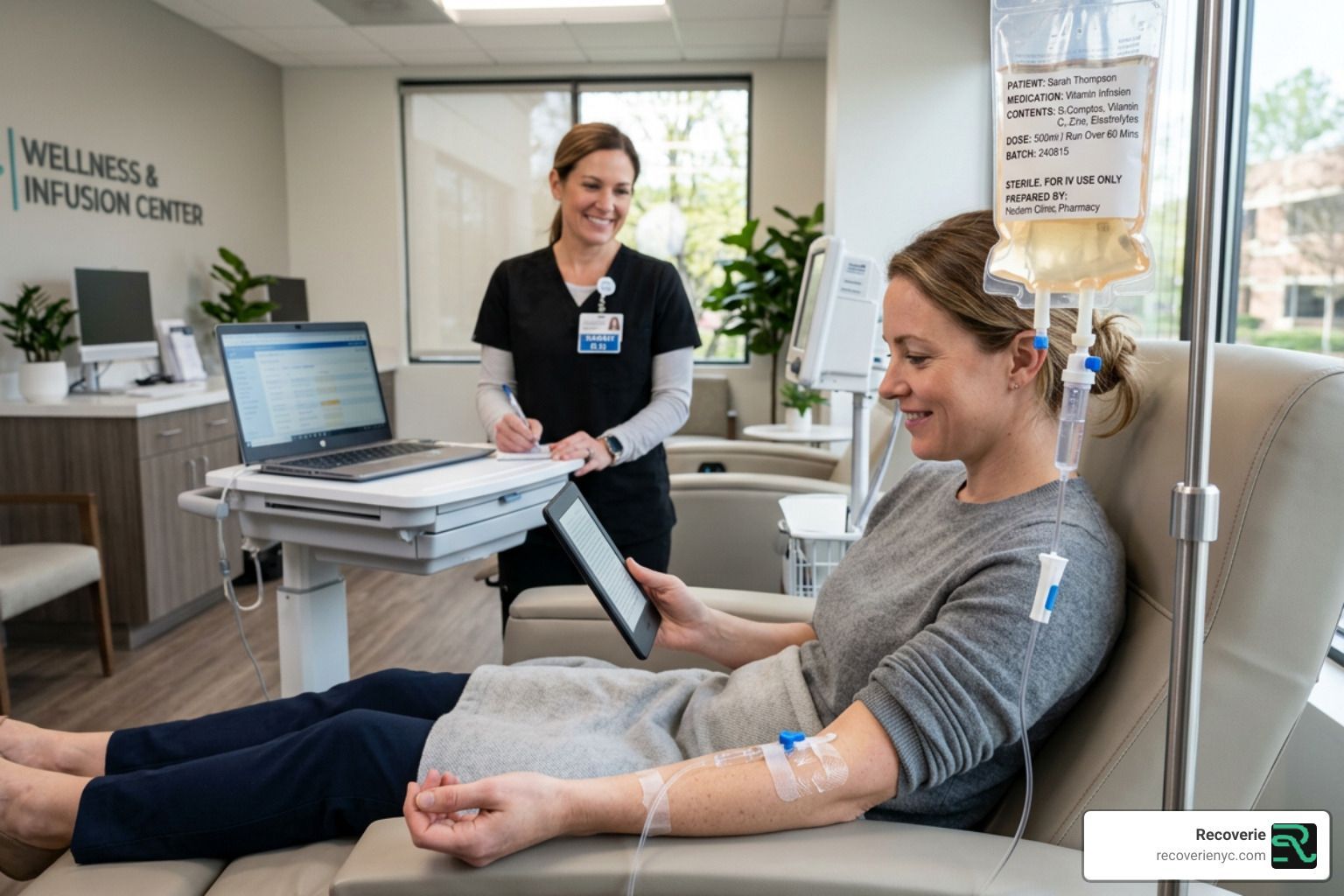
Most people find IV therapy deeply relaxing. A small needle is placed in your arm, and the drip takes 30 to 60 minutes depending on the formula. Many clients read, listen to music, or rest during their session.
Are There Any Side Effects?
IV therapy is generally very safe when administered correctly. Minor side effects can include slight bruising at the insertion site or a cool sensation in the arm. Serious complications are rare — but they underscore the importance of choosing a medically supervised provider.
IV Therapy in Brooklyn, NY — Recoverie NYC
If you're in Brooklyn and looking for fast, professional IV hydration therapy, Recoverie NYC has a full menu of IV drips designed for real recovery needs:
- Hangover IV — rapid rehydration and nausea relief
- Immune Support IV — high-dose Vitamin C and immune-boosting nutrients
- Myer's Cocktail — the gold-standard IV blend for energy and overall wellness
- Migraine IV — targeted relief with magnesium and hydration
- Nausea IV — fluids plus anti-nausea support
- NAD+ therapy — cellular energy, mental clarity, and anti-aging support
Recoverie NYC also offers complementary wellness therapies including infrared sauna, whole body cryotherapy, and red light therapy — all available in one Brooklyn wellness studio.
Frequently Asked Questions
Is IV hydration better than drinking water?
For daily hydration, water is essential and effective. But when you need rapid rehydration — during illness, after a hangover, or following intense exercise — IV therapy is significantly faster and more efficient because it bypasses digestion entirely.
How quickly does IV hydration work compared to drinking water?
IV therapy delivers fluids directly to your bloodstream, with effects felt within 30 to 45 minutes. Oral hydration can take 45 minutes to two hours or more depending on your digestive health.
Can IV therapy replace drinking water every day?
No. Daily water intake is still necessary for overall health. IV therapy is a powerful tool for acute recovery and wellness optimization — not a substitute for consistent hydration habits.
Who is a good candidate for IV hydration therapy?
Anyone recovering from a hangover, illness, intense exercise, jet lag, or a migraine can benefit. People with certain medical conditions should consult a doctor before their first session.
Is IV hydration therapy safe?
Yes, when performed by licensed medical professionals. At Recoverie NYC, all IV therapy sessions in Brooklyn are clinically supervised to ensure your safety and comfort.
Where can I get IV therapy in Brooklyn, NY?
Recoverie NYC offers a full range of IV hydration therapy services in Brooklyn. Browse their menu and book directly at recoverienyc.com.
Ready to Rehydrate the Fast Way?
Don't wait hours for water to kick in. Whether you're recovering from a long night, fighting off illness, or just running on empty — IV therapy gets you back to 100%, fast.
Book your IV hydration session at Recoverie NYC today. Visit recoverienyc.com to choose your drip and schedule your appointment in Brooklyn, NY.
Your body works hard. Give it what it actually needs.