A Complete Guide to Red Light Therapy for Your Skin
What Red Light Therapy for Your Face Actually Does
Red light therapy for face is a non-invasive treatment that uses specific wavelengths of red and near-infrared light to stimulate your skin cells from the inside out — reducing wrinkles, calming acne, evening skin tone, and supporting collagen production.
Here's a quick summary of what it does:
| Concern | What Red Light Therapy Can Help With |
|---|---|
| Wrinkles & fine lines | Stimulates collagen and elastin production |
| Acne | Reduces inflammation and oil secretion |
| Redness & rosacea | Calms inflammation and improves circulation |
| Dark spots | Helps even skin tone over time |
| Skin texture | Smooths and softens with consistent use |
| Hair thinning | Stimulates follicles for regrowth |
It works at the cellular level — no UV radiation, no heat damage, no downtime.
The science isn't new. NASA first explored light therapy to help astronauts heal wounds in space. Since then, hundreds of peer-reviewed studies have examined how red light interacts with human cells. Today, it's used in dermatology offices and increasingly in at-home devices that fit right into a busy daily routine.
More than 90% of patients in one clinical study reported softer skin, less redness, and lightened dark spots after just eight treatments over four weeks. That kind of result is hard to ignore — especially when the treatment takes less time than your morning coffee.
Whether you're dealing with stress-related skin flare-ups, early signs of aging, or just want that well-rested glow without the spa price tag, red light therapy is worth understanding properly.
I'm Mellisa Kerchief, a board-certified Family Nurse Practitioner and founder of a medical aesthetics practice, and my background in emergency and critical care medicine gives me a patient-safety-first lens when evaluating treatments like red light therapy for face. In this guide, I'll walk you through the science, the evidence, and exactly how to use it safely and effectively.
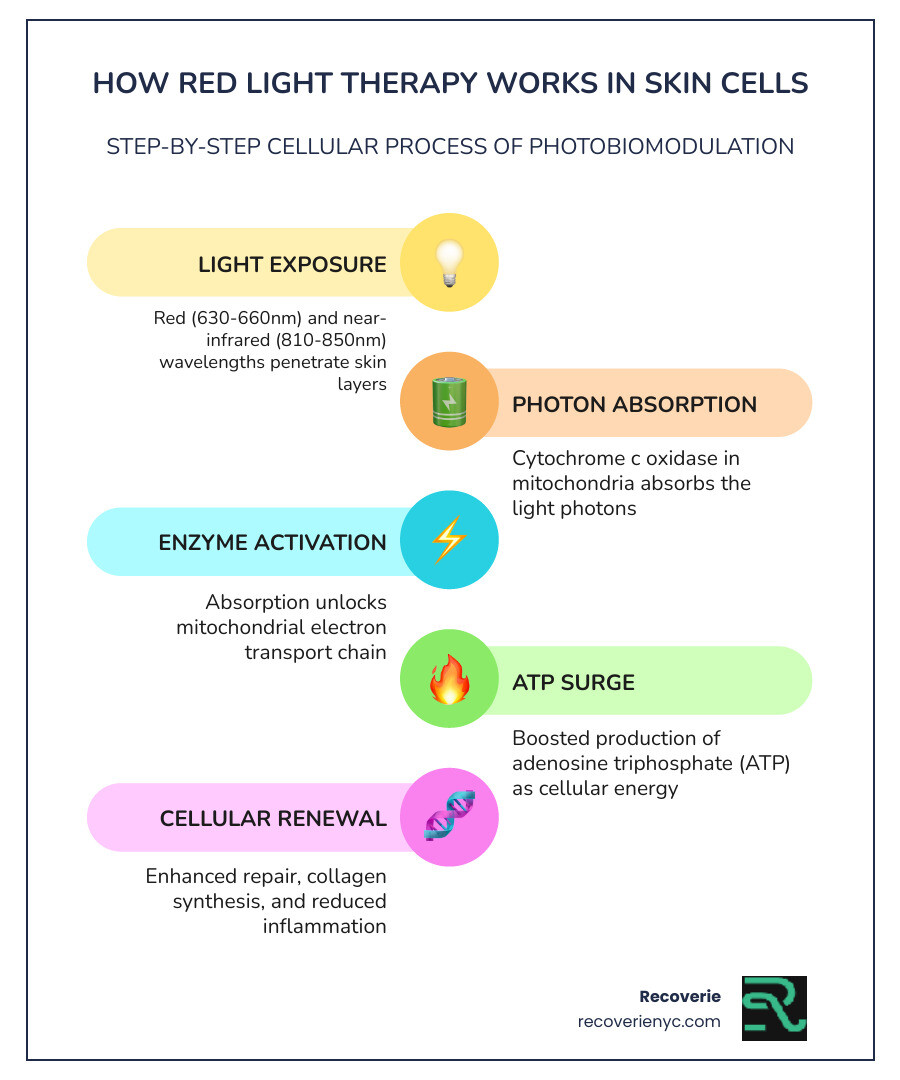
How Red Light Therapy for Face Works at a Cellular Level
To understand why red light therapy for face is so effective, we have to look past the surface of the skin and dive into our biology. At its core, this therapy is about energy. Every cell in your body contains tiny "power plants" called mitochondria. These mitochondria are responsible for producing Adenosine triphosphate (ATP), which is essentially the fuel your cells use to function, repair, and replicate.
When we expose our skin to specific wavelengths—typically 630-660nm (visible red light) and 810-850nm (near-infrared light)—a fascinating chemical reaction occurs. A light-sensitive enzyme called cytochrome c oxidase absorbs these photons. This absorption kicks the mitochondria into high gear, increasing ATP production.
According to a Harvard Health overview of red light therapy, this process, known as photobiomodulation, allows cells to repair themselves and calm inflammation without the use of heat or physical injury. Unlike a laser that might "damage" the skin to trigger a healing response, red light simply provides the energy cells need to do their best work. For more background on the science, you can check out more info about red light therapy on our dedicated service page.
Proven Benefits for Wrinkles, Acne, and Skin Texture
The beauty of red light therapy for face is that it doesn’t just target one issue; it addresses the foundational health of the skin. By boosting cellular energy, we see a cascade of benefits that help with several common concerns simultaneously.
First, let's talk about aging. As we get older, our collagen and elastin production naturally slows down, leading to fine lines and sagging. Red light therapy stimulates fibroblast activity—the cells responsible for making collagen. Scientific research on skin quality and aging has shown that consistent use of red light masks can significantly improve skin firmness and reduce wrinkle depth, with results often lasting up to a month after stopping treatment.
For those struggling with breakouts, red light offers a gentle alternative to harsh chemicals. Research on acne and oil secretion suggests that a series of treatments can decrease skin oil (sebum) production and reduce the number of acne lesions. While blue light is often used to kill bacteria, red light excels at reducing the painful inflammation and redness associated with cystic acne.
Addressing Redness and Hyperpigmentation
If you struggle with rosacea or "maskne," you know how frustrating persistent redness can be. Red light therapy helps by improving microcirculation and reducing systemic inflammation. By calming the "fire" in the skin, it helps even out the complexion.
Dark spots and hyperpigmentation also see improvement. While it won't bleach the skin, the increased cellular turnover helps old, pigmented cells move through the layers faster, leading to a more radiant, uniform tone. We often call this the "glow-up" effect, which you can read more about in our article on glow-up benefits for well-being.
Red Light Therapy for Face and Hair Growth
One of the most surprising "side effects" of red light therapy is its impact on hair. While we usually focus on the skin, the same biological mechanism—increased ATP and better blood flow—works on hair follicles. Studies on hair regrowth efficacy have found that low-level light therapy can be as effective as minoxidil for treating hereditary hair loss.
If you use a red light device near your hairline or beard area, you might notice thicker, faster-growing hair. It increases the terminal hair count (the thick, dark hairs) by extending the growth phase of the follicle.
Choosing and Using At-Home Devices Effectively
With the explosion of the wellness market, New Yorkers are often overwhelmed by the sheer number of gadgets available. From Brooklyn Heights to the Upper West Side, everyone wants to know: which device actually works?
When choosing a device for red light therapy for face, the most important factor is FDA 510(k) clearance. This doesn't mean the FDA "approves" the device like a drug, but it does mean they have cleared it as safe and effective for its intended use (usually wrinkles or mild acne).
Comparing Device Types
| Device Type | Best For | Pros | Cons |
|---|---|---|---|
| LED Masks | Full-face treatment | Hands-free, even coverage | Can be pricey, fixed shape |
| Panels | Face, neck, and chest | High power, multi-use | Requires sitting still in front of it |
| Wands | Targeted spots (eyes/lips) | Portable, affordable | Takes longer to treat the whole face |
For a standard session, we recommend 10-20 minutes. If you are using a high-powered panel, you might only need 5-10 minutes, whereas a lower-intensity mask or wand may require the full 20 minutes to deliver an effective "dose" of light.
Integrating Red Light Therapy for Face into Your Routine
To get the most out of your sessions, you need a plan. Think of it like going to the gym; one session won't give you a six-pack, but consistency over three months will transform your results.
- Double Cleanse: Always start with a clean face. Makeup, sunscreen, and oils can reflect the light, preventing it from reaching your cells.
- Apply a Water-Based Serum: If you want an extra boost, use a serum with hyaluronic acid or peptides. Avoid anything "heavy" or oil-based before your session.
- Positioning: If using a panel, stay about 6 to 12 inches away. If using a mask, ensure it sits comfortably against the skin.
- Frequency: Start with 3 sessions per week to see how your skin reacts. Once you're comfortable, 5 times per week is the "sweet spot" for most people.
- Post-Care: Follow up with your usual moisturizer and, if it's daytime, a high-quality SPF.
Safety, Side Effects, and Expert Precautions
Is red light therapy for face safe? Generally, yes. It is non-invasive and does not contain UV rays, meaning it won't cause sunburn or skin cancer. However, "safe" doesn't mean "careless."
The most common side effects are temporary redness, a warm sensation, or slight skin tightness. These usually fade within an hour. However, there are a few critical precautions to keep in mind:
- Eye Protection: Even though red light isn't UV, it is very bright. Chronic exposure to high-intensity LEDs can strain the eyes. Always use the goggles provided with your device or keep your eyes closed during the session.
- Photosensitizing Meds: If you are taking medications like Tetracycline or certain antidepressants that make you sensitive to light, consult your doctor first.
- Darker Skin Tones: While red light is safe for all ethnicities, people with very high melanin levels should start with shorter sessions. In rare cases, the slight heat generated by some devices can trigger post-inflammatory hyperpigmentation.
Following the American Academy of Dermatology safety guidelines is the best way to ensure you're getting the benefits without the risks.
Expert Insights from Stanford and Cleveland Clinic
Medical experts from institutions like Stanford and the Cleveland Clinic emphasize that while at-home devices are great for maintenance, professional treatments are significantly more powerful.
In a clinical setting, we can control the "dosage" of light much more precisely. Some treatments even use "photodynamic therapy," where a light-sensitive drug is applied to the skin before the red light session to treat precancerous cells or severe acne. For a deeper dive into these medical distinctions, the Cleveland Clinic guide to benefits and risks is an excellent resource.
Frequently Asked Questions about Red Light Therapy for Face
How long does it take to see results on the face?
Patience is a virtue here! You might notice a "glow" or reduced puffiness after just one or two sessions, but structural changes take time.
- 4-6 Weeks: You’ll likely see improved skin texture and a reduction in redness.
- 3 Months: This is the "gold standard" milestone where most users see a visible softening of fine lines and firmer skin.
- Maintenance: Once you reach your goals, you can drop down to 2-3 sessions a week to keep the results.
Can I use red light therapy with retinol or Vitamin C?
This is a common point of confusion. We recommend using your red light device on clean, dry skin or with a simple hyaluronic acid serum.
- Retinol: Use your red light before applying retinol. Since retinol can make skin sensitive, using it after the light session helps avoid irritation while potentially improving the product's absorption.
- Vitamin C: Like retinol, it's best applied after your session. Red light helps "prep" the skin to receive these active ingredients.
Is red light therapy safe for all skin types?
Yes, it is generally safe for all skin types, including dry, oily, and sensitive skin. Unlike many laser treatments that can be risky for darker skin tones (due to the risk of burning the melanin), red light therapy is non-thermal. However, as mentioned, if you have very dark skin, start with shorter sessions (5 minutes) to ensure your skin doesn't react to the light with increased pigmentation.
Conclusion
At Recoverie, we believe that wellness shouldn't be a chore—it should be a sanctuary. Whether you are visiting us in Brooklyn or NYC, our goal is to provide science-backed tools that help you feel like the best version of yourself.
Red light therapy for face is one of those rare treatments that actually lives up to the hype, provided you approach it with the right expectations and a consistent routine. It’s a way to give your cells the energy they need to repair the damage of city living—from pollution to stress-induced breakouts.
If you’re ready to see what a "cellular recharge" can do for your skin, we invite you to experience the difference for yourself. From our Brooklyn Heights location at 135 Bridge Park Dr to our community-focused spaces across the city, we are here to support your journey toward radiant, healthy skin.
Start your journey with Red Light Therapy today and discover why this NASA-born technology has become a staple of modern New York skincare.