The Bright Side of Healing with Red Light Therapy
What Red Light Therapy for Inflammation Actually Does (And Why It Works)
Red light therapy for inflammation is a non-invasive treatment that uses low-level red and near-infrared light to reduce swelling, pain, and cellular stress — without drugs or downtime.
Here's a quick summary of what the research shows:
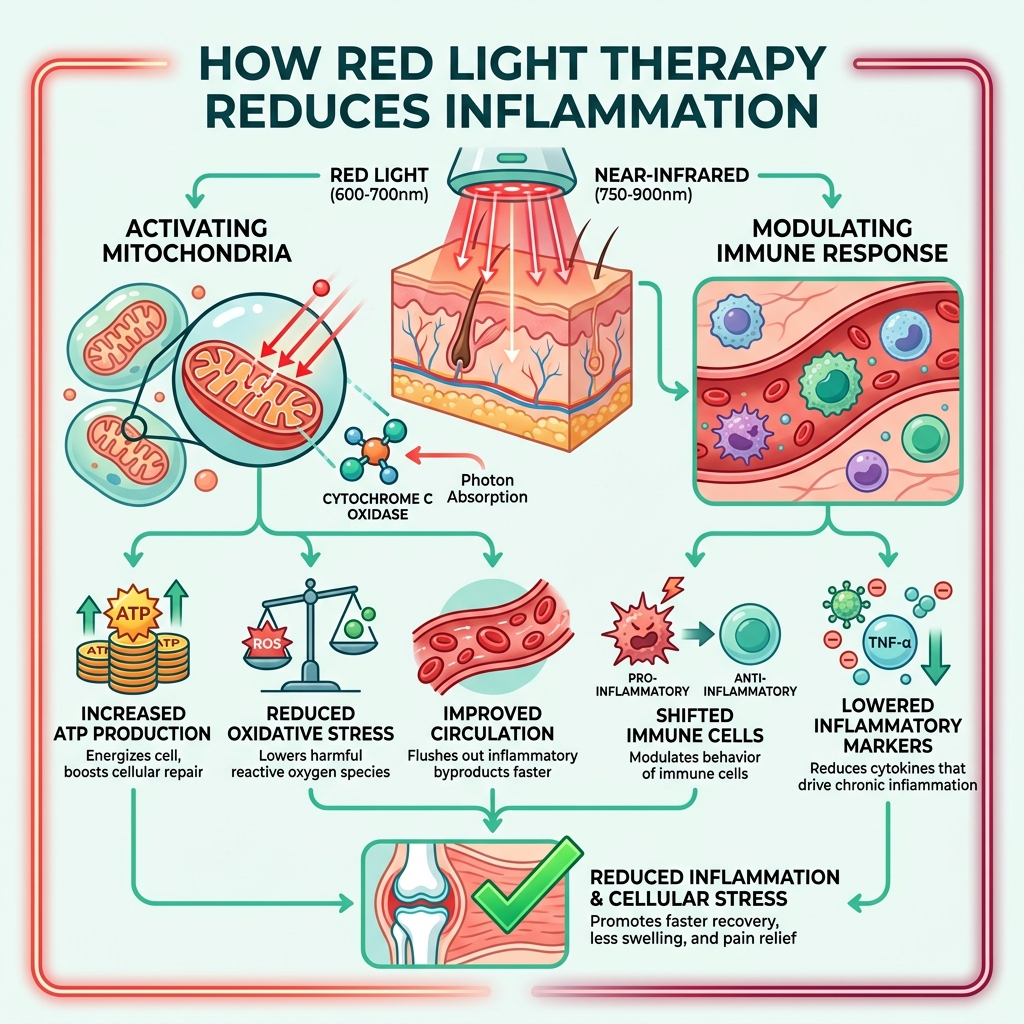
| What It Does | How It Helps Inflammation |
|---|---|
| Energizes mitochondria | Boosts cellular repair and reduces tissue damage |
| Modulates immune response | Shifts immune cells away from pro-inflammatory behavior |
| Reduces inflammatory markers | Lowers cytokines like TNF-α that drive chronic inflammation |
| Improves circulation | Helps flush out inflammatory byproducts faster |
| Supports oxidative balance | Reduces harmful reactive oxygen species in stressed cells |
Whether you're dealing with sore muscles after a hard workout, stiff joints, or skin flare-ups — red light therapy offers a science-backed, drug-free path to relief.
It sounds almost too simple. Shine a specific wavelength of light on your body and feel better? But this isn't a wellness trend built on hype. The science goes back decades — NASA originally explored red light to support wound healing in astronauts. Since then, hundreds of peer-reviewed studies have examined how red and near-infrared light interact with human cells at the molecular level.
The results are compelling. One Cochrane review found that low-level laser therapy reduced morning stiffness and pain in rheumatoid arthritis patients. A separate study found that 68% of fibromyalgia patients reported pain relief with red light therapy, compared to just 24% in the placebo group. And research on thyroiditis patients showed that anti-inflammatory effects from a single course of treatment lasted six years after treatment ended.
Chronic inflammation is one of the most common — and most overlooked — drivers of fatigue, pain, and slow recovery. If you're a busy person pushing hard through work and workouts, it quietly works against you every day.
This guide breaks down exactly how red light therapy addresses inflammation, what conditions it helps most, and how to use it safely and effectively.
I'm Mellisa Kerchief, a board-certified Family Nurse Practitioner with over 12 years of emergency and critical care experience — the kind of clinical background that shapes how I evaluate therapies like red light therapy for inflammation with both scientific rigor and real-world practicality. Let's get into what the evidence actually says.
How Red Light Therapy for Inflammation Works at a Cellular Level
To understand how red light therapy for inflammation works, we have to look inside the cell. Imagine your cells are like a busy factory. When you have inflammation, the assembly line gets clogged, energy drops, and waste builds up. Red light therapy acts like a "gentle nudge" to get that factory running smoothly again.
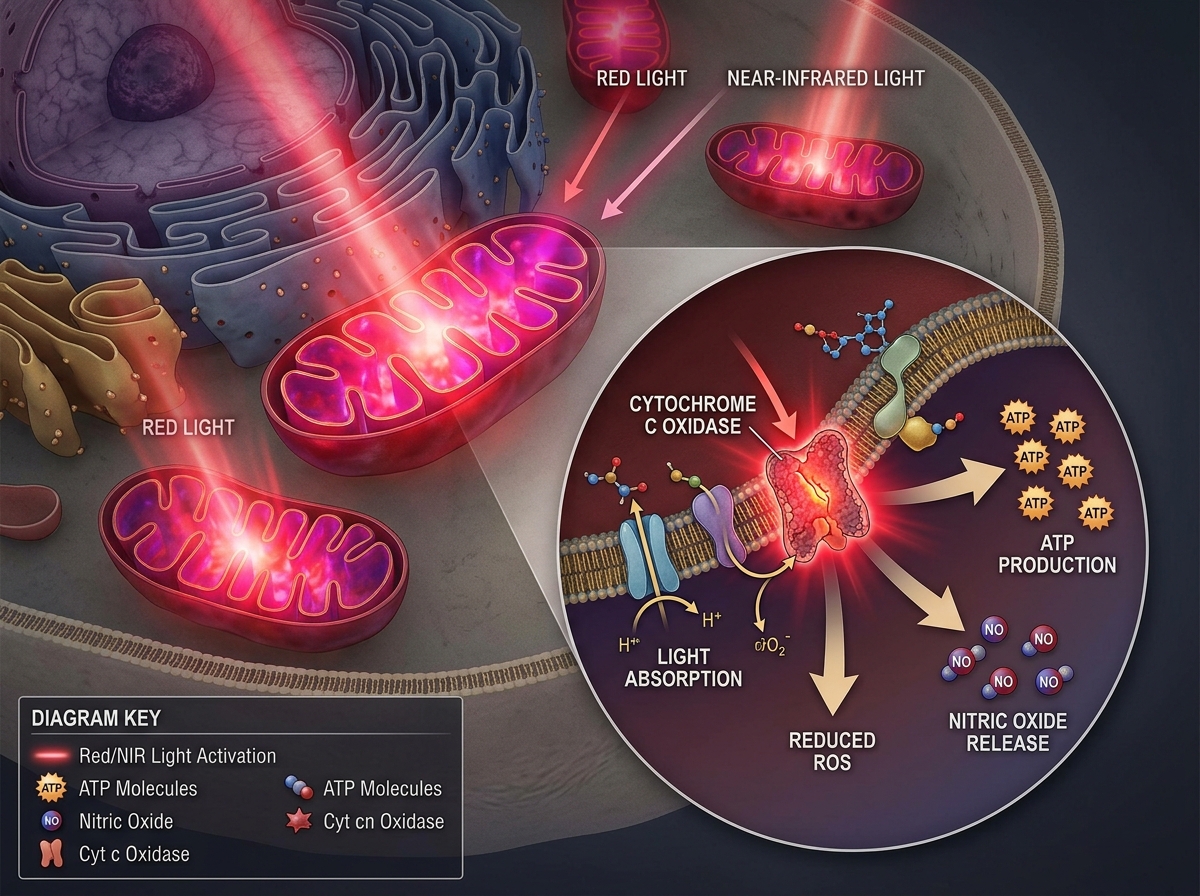
The primary "engine" behind this process is the mitochondria. Within the mitochondria sits a protein called cytochrome c oxidase. This protein is a chromophore, meaning it is specifically designed to absorb light. When red or near-infrared light hits this protein, it triggers a cascade of biological benefits:
- ATP Production: The cell produces more Adenosine Triphosphate (ATP), which is the primary energy currency of the body. More energy means the cell can repair itself faster.
- Nitric Oxide Release: The light helps release nitric oxide, which dilates blood vessels (vasodilation). This improves blood flow, allowing oxygen and nutrients to reach the inflamed area while flushing out waste.
- Reactive Oxygen Species (ROS) Modulation: In a fascinating twist, RLT produces a brief burst of ROS in healthy cells to strengthen them, but it actually reduces ROS in oxidatively stressed cells. This helps rebalance the cellular environment.
- Transcription Factors: The therapy influences NF-kB, a protein complex that controls the transcription of DNA. By modulating NF-kB, RLT can decrease the production of pro-inflammatory cytokines like TNF-α.
- Macrophage Polarization: Our immune system has "M1" macrophages (pro-inflammatory) and "M2" macrophages (anti-inflammatory). Research indicates that photobiomodulation helps shift these cells toward the healing M2 phenotype.
One of the most important concepts in this science is the biphasic dose response. This means that a low to moderate dose of light stimulates healing, but an excessively high dose can actually inhibit those benefits. It’s the "Goldilocks" principle of wellness: not too little, not too much, but just right.
Key Benefits of Red Light Therapy for Inflammation in the Body
When we talk about red light therapy for inflammation, we aren't just talking about a local "spot treatment." While it works wonders on a specific sore knee, it also has systemic effects. Light absorbed in one area can trigger anti-inflammatory signals that travel through the bloodstream to other parts of the body.
The broad review of literature on photobiomodulation highlights its effectiveness for both chronic and acute pain. By suppressing pro-inflammatory cytokines and boosting antioxidant defenses, RLT helps the body move out of a state of constant "alarm" and into a state of active repair. This is particularly helpful for New Yorkers who deal with the high-stress environment of the city, which can often lead to elevated baseline inflammation.
Soothing Joint Pain and Arthritis
For those living with arthritis, morning stiffness isn't just an inconvenience; it’s a barrier to starting the day. Whether it is Rheumatoid Arthritis (an autoimmune condition) or Osteoarthritis (wear-and-tear), the underlying issue is persistent inflammation within the joint capsule.
RLT has shown significant promise in:
- Reducing Morning Stiffness: Helping joints move more fluidly upon waking.
- Cartilage Support: While it won't "regrow" a fully lost joint, it supports the health of the remaining tissue.
- Fibromyalgia Relief: As mentioned earlier, a significant majority of fibromyalgia patients see a reduction in widespread pain.
If you’re interested in how we incorporate this into a broader wellness plan, you can find more info about red light therapy at our Brooklyn sanctuary.
Accelerating Muscle Recovery and Reducing Soreness
Athletes have been some of the earliest adopters of RLT, and for good reason. Intense exercise causes micro-tears in muscle fibers, leading to delayed onset muscle soreness (DOMS).
Research on muscle recovery indicates that using red and near-infrared light post-exercise can:
- Reduce Lactic Acid: Helping clear the "burn" faster.
- Decrease Strength Loss: Allowing you to return to your training schedule sooner.
- Support Tissue Repair: Speeding up the biological rebuilding process of the muscle.
At Recoverie, we often see marathon runners and high-intensity trainers using RLT on their quads or back to ensure they don't lose a week of progress to recovery.
Managing Skin Conditions and Surface-Level Red Light Therapy for Inflammation
Inflammation isn't always deep in the muscles; often, it’s right on the surface. Skin conditions like acne, psoriasis, and eczema are essentially inflammatory responses.
- Acne: RLT reduces the redness and swelling of acne lesions. When combined with blue light, it can also target bacteria.
- Anti-Aging: A study on skin quality found that three months of RLT use reversed visible signs of aging, with results lasting up to a month after stopping.
- Wound Healing: By boosting collagen production and circulation, RLT helps close wounds and reduce the formation of thick scar tissue or fibrosis.
Optimizing Your Treatment: Wavelengths and Protocols
Not all light is created equal. To get the best results for red light therapy for inflammation, you need to understand the "therapeutic window." This generally falls between 630nm and 850nm.
- Red Light (630nm - 660nm): These shorter wavelengths are absorbed primarily by the skin. They are perfect for acne, fine lines, and surface wounds.
- Near-Infrared Light (810nm - 850nm): These longer wavelengths penetrate much deeper, reaching muscles, tendons, and even bone. This is the "heavy hitter" for deep-seated inflammation.
Red Light Therapy vs. Traditional Anti-Inflammatories
Many people turn to RLT to reduce their reliance on medications. Here is how they compare:
| Feature | NSAIDs (e.g., Ibuprofen) | Red Light Therapy |
|---|---|---|
| Mechanism | Inhibits COX enzymes chemically | Stimulates cellular energy & repair |
| Side Effects | Potential gut/kidney issues | Minimal (eye protection needed) |
| Speed | Fast (30-60 minutes) | Cumulative (days to weeks) |
| Long-term Use | Discouraged for chronic use | Generally safe for daily use |
| Cost | Low per dose | Upfront device/session cost |
Choosing the Right Device for Red Light Therapy for Inflammation
If you're looking for a device for home use or evaluating a professional studio, quality matters. The market is flooded with cheap LEDs that might look pretty but don't have the "irradiance" (power density) to actually penetrate your tissues.
- FDA Clearance: Always look for FDA-cleared devices. This ensures the manufacturer is meeting safety and output standards.
- LED vs. Laser: Clinical lasers are more powerful and typically found in medical offices. However, high-quality LED panels (like the ones we use in our NYC locations) provide excellent results for broad areas of the body safely.
- Targeted vs. Full-Body: If you have systemic inflammation, a full-body panel or bed is ideal. For a specific injury like tennis elbow, a targeted device works well.
For a deeper dive into the aesthetic side of these devices, check out our guide on how red light therapy transforms your skin.
Safety, Side Effects, and Precautions
One of the biggest draws of red light therapy for inflammation is its safety profile. It is non-toxic, non-invasive, and does not use harmful UV rays. However, there are a few rules to follow:
- Eye Protection: Never stare directly into the LEDs. High-intensity red light can damage the retina. Always wear the provided blackout goggles or eye shields.
- Photosensitivity: Some medications (like certain antibiotics or acne treatments) can make your skin more sensitive to light. Consult your doctor if you are on a new prescription.
- Pregnancy: While there is no evidence of harm, we generally recommend pregnant women consult their physician before starting any new light-based therapy.
- Cancer: Do not use RLT directly over active malignant tumors without oncological supervision. While it is used to treat side effects of cancer treatment (like oral mucositis), the direct effect on tumors is still being studied.
According to FDA guidance, these devices are considered Class II medical devices for aesthetic use, meaning they are safe when used as directed.
Frequently Asked Questions about Red Light Therapy for Inflammation
How long does it take to see results for inflammatory conditions?
It depends on the "age" of the inflammation. Acute injuries (like a fresh sprain) might feel better within 24-48 hours. Chronic conditions like arthritis typically require 3–4 weeks of consistent use (3–5 times per week) to see a significant shift in baseline pain and stiffness.
Can I use red light therapy every day safely?
Yes! In fact, consistency is key. Most protocols suggest 10–20 minutes per day. Just remember the biphasic dose response: more is not always better. Doing three hours a day won't heal you three times faster; it might actually slow the process down.
Does red light therapy work for systemic or internal inflammation?
Emerging research suggests it does. Studies on mice showed that light exposure reduced inflammation in abdominal fat. In humans, transcranial RLT (light through the skull) is being studied for its ability to reduce neuroinflammation in conditions like dementia and Parkinson's.
Conclusion
The journey to health doesn't always have to involve "no pain, no gain." Sometimes, the most effective path is a gentle, science-backed approach that works with your body's natural biology rather than against it. Red light therapy for inflammation offers a way to clear the "clogged assembly line" of your cells, giving you more energy and less pain.
At Recoverie, we’ve built a community-focused sanctuary right here in Brooklyn (including Brooklyn Heights and near Bridge Park Dr) where you can access this advanced technology in a space designed for total relaxation. Whether you are looking to recover from a grueling workout at the gym or simply want to manage the daily aches of New York life, we are here to help.
Ready to see the "bright side" of healing for yourself? Start your healing journey at Recoverie and discover how a little light can make a massive difference in how you feel every day.